A succulent built for dry places
Fleshy leaves store water, helping kanna thrive in arid, well-drained sandy and stony soils, often sheltered among other low-growing plants.
Rooted in South Africa · Thoughtfully selected · Made for real life
More about kanna
An indigenous South African succulent with a story far older than any wellness trend — and the botanical at the heart of every kanna kraal ritual.
Chapter one
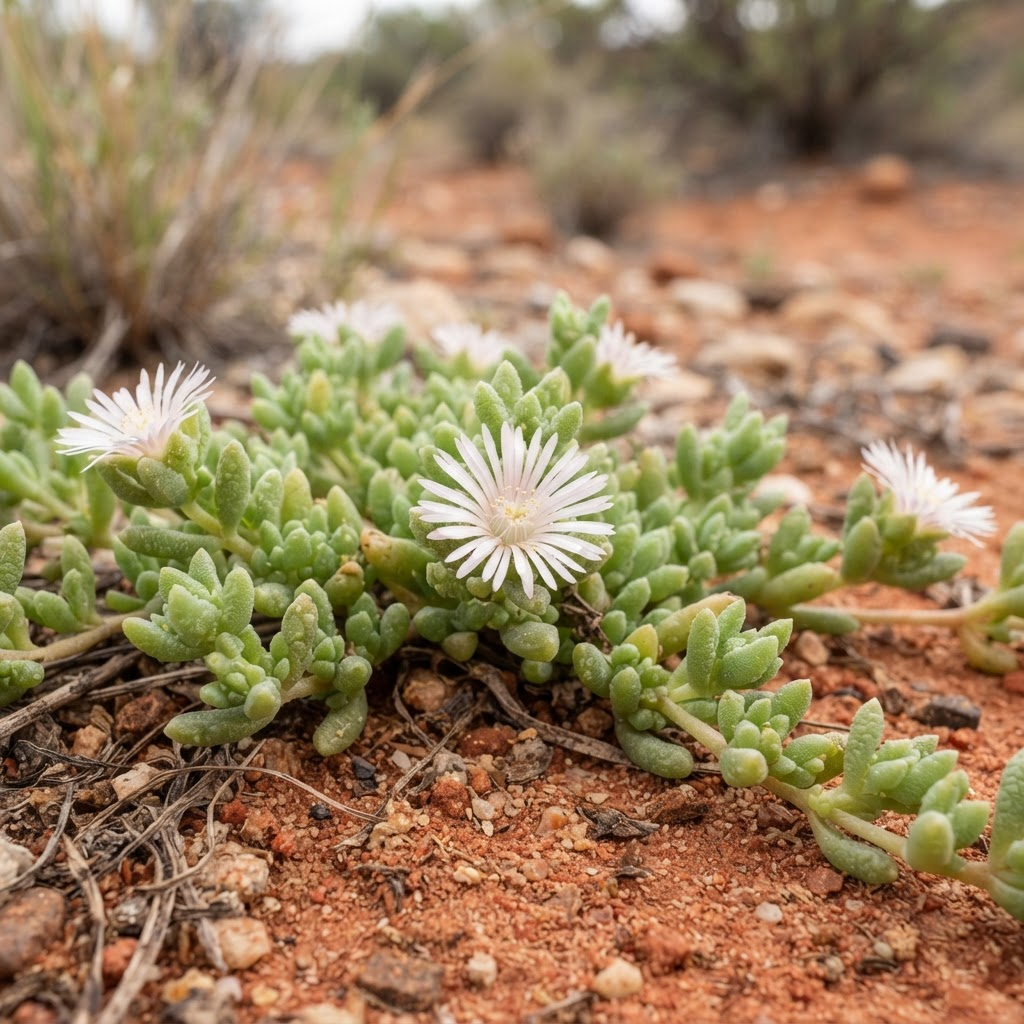
Kanna is the common name for Sceletium tortuosum, a low-growing succulent in the Aizoaceae family — the same family as South Africa's vygies. It is also known as channa and, once traditionally prepared, as kougoed.
Fleshy leaves store water, helping kanna thrive in arid, well-drained sandy and stony soils, often sheltered among other low-growing plants.
In the dry season the plant goes dormant. Its leaves dry out, leaving behind a fine network of veins.
“Sceletium” comes from the Latin for skeleton, after those skeleton-like leaf veins.
A plant of place
Kanna grows naturally in the arid and semi-arid regions of South Africa's Western, Northern and Eastern Cape — including Namaqualand, the Klein Karoo and Kannaland.
These are also the lands our family calls home. Our roots run through Namaqualand and Kannaland, and family still lives in both regions today. For us, kanna is part of a homecoming.
Where kanna grows, and where our family's roots run.
Our family roots

A living tradition
Long before kanna had a botanical name, it was known to the Khoi and San peoples of Southern Africa. Prepared as kougoed, it was chewed and shared — carried on long journeys, part of community and ceremony, and woven into everyday life.
“Kanna Kraal is not introducing a new ingredient. We are sharing an indigenous South African botanical with a much older story — and we hold that story with respect.”
A thoughtful process
Traditionally, kanna was not simply eaten fresh. It was transformed.
The plant is gathered.
Leaves and stems are bruised or crushed to open them up.
The crushed plant is sealed and left to “sweat” for several days.
It is then dried, traditionally in the sun.
The result: kougoed, an Afrikaans word for “something to chew”.
Traditional preparation changes the raw plant. Fermenting and drying are often described as making kanna gentler and more palatable, and are thought to change its natural chemistry. It is a reminder that people have been working thoughtfully with this plant for a very long time.
Why it matters
Stress and strain don't always look the way they feel.

On the outside, many people appear to be managing well.
A lot can be going on beneath the surface, even when someone looks fine.
If what's beneath the surface feels like more than everyday strain, please speak to a healthcare professional.
Your mind, body and nervous system work as an interconnected whole.
As part of a regular, consistent routine, kanna may help support:
Kanna is a food supplement, not a medicine. It is not intended to diagnose, treat, cure or prevent any disease. If you take prescription medication, especially antidepressants or other medicines that affect serotonin, speak to your doctor or pharmacist before using kanna.
Returning to yourself often starts below the surface.
The range
Every kanna kraal ritual starts with the same plant, but not the same profile. Kanna naturally contains a family of alkaloids, and different extracts carry them in different balances. Those balances may shape different felt experiences, so we have shaped our range around different needs and moments of the day.
Coming soon: Homecoming Morning Drops and Breathe.
Inside the range
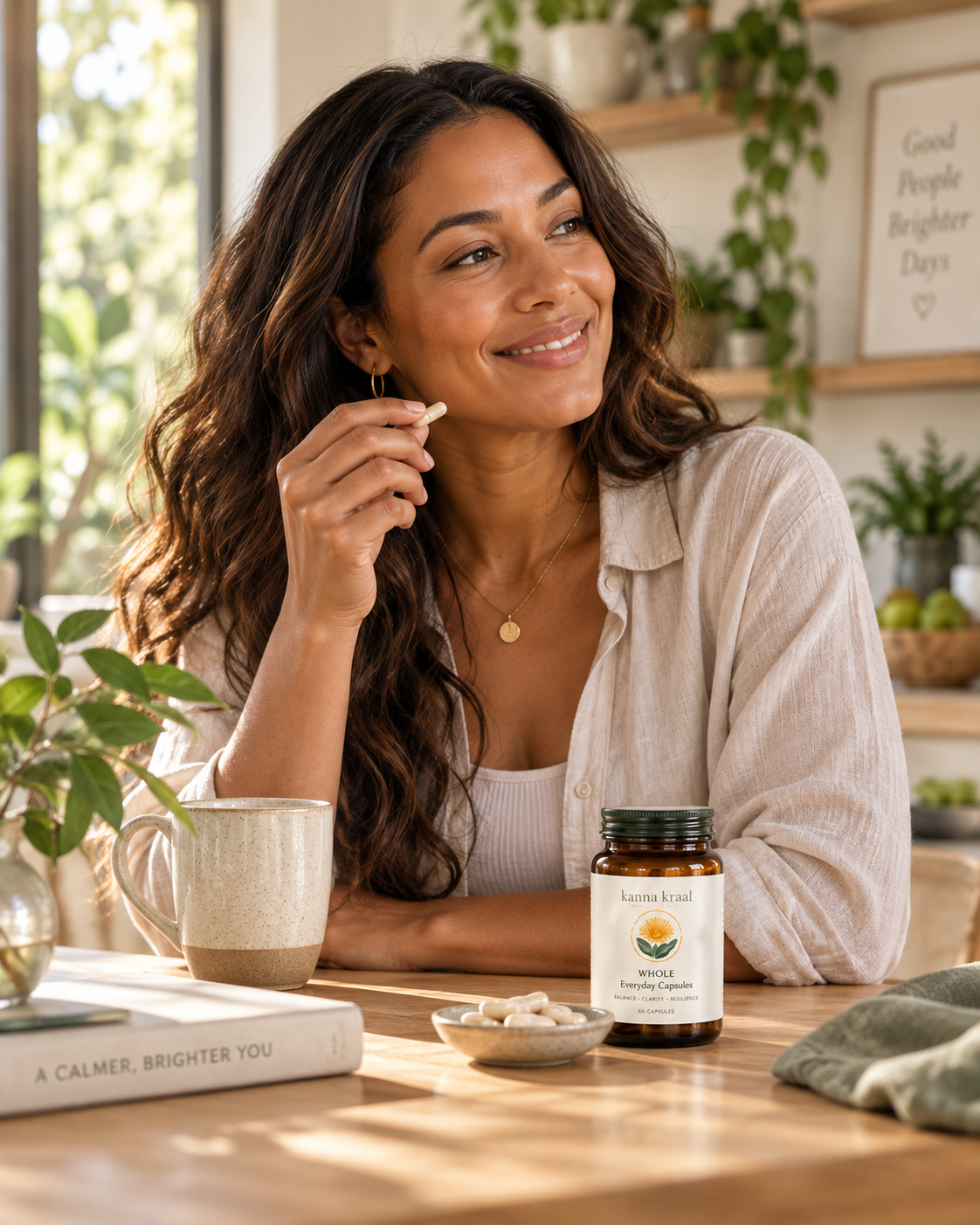
Whole is named for the feeling of being more centred, balanced and able to meet daily life with steadiness.
A mesembrine-led kanna extract, shaped for everyday clarity, emotional steadiness and resilience.
May support a centred sense of balance, resilience and clearer daily functioning.
Its balance sits between Awaken and Exhale, which may help support an everyday sense of steadiness rather than intensity.
Kanna is a food supplement, not a medicine. It is not intended to diagnose, treat, cure or prevent any disease. If you take prescription medication, especially antidepressants or other medicines that affect serotonin, speak to your doctor or pharmacist before using kanna.